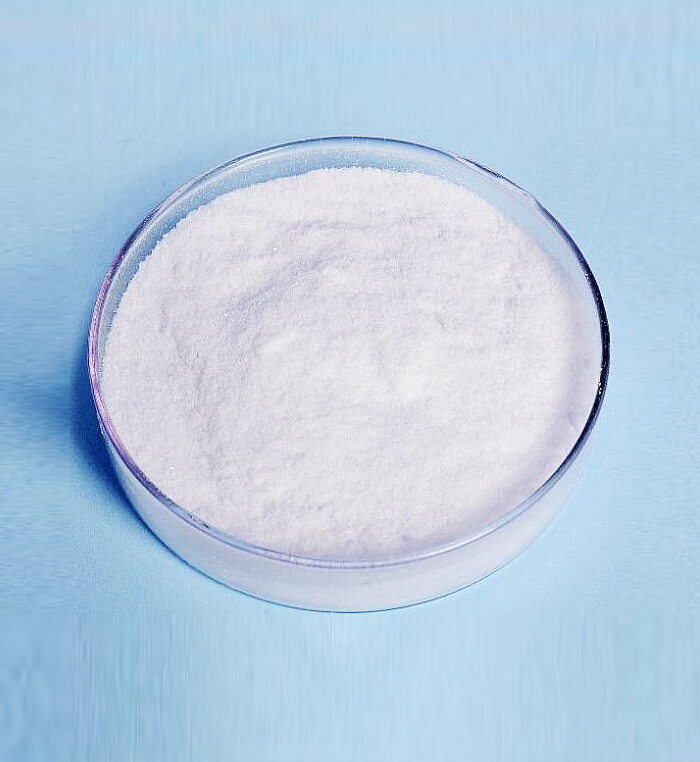
Plant-derived compounds have attracted considerable attention as researchers explore the relationship between diet, natural chemistry, and human health. Among these compounds, indole-3-carbinol has become particularly interesting because it is naturally associated with vegetables in the Brassica family, including broccoli, cabbage, kale, Brussels sprouts, and cauliflower. Today, purified forms such as indole-3-carbinol powder are also used in research, nutritional formulations, and supplement products. Its scientific appeal comes from the way it behaves in the body and the variety of biological pathways that researchers continue to investigate.
What Is Indole-3-Carbinol?
Indole-3-carbinol is a naturally occurring compound formed from glucobrassicin, a glucosinolate found in cruciferous vegetables. When these vegetables are chopped, chewed, or otherwise damaged, plant enzymes help convert glucobrassicin into several compounds, including indole-3-carbinol.
Unlike vitamins and minerals, indole-3-carbinol is a phytochemical. Phytochemicals are naturally occurring substances produced by plants that may have biological activity in humans. They are not necessarily essential nutrients, but many have attracted scientific interest because of their interactions with cellular processes.
The availability of indole-3-carbinol powder provides a concentrated form of this plant-derived compound. Powdered ingredients can be incorporated into research preparations, dietary formulations, and other products where precise ingredient handling is important.
Why Cruciferous Vegetables Matter
The connection between indole-3-carbinol and cruciferous vegetables is one of the main reasons this compound receives attention. Broccoli, cabbage, kale, cauliflower, and Brussels sprouts are widely recognized as nutrient-rich foods that provide fiber, vitamins, minerals, and numerous plant compounds.
When cruciferous vegetables are prepared and consumed, their glucosinolates can undergo chemical transformations. Indole-3-carbinol is one result of these processes. However, the amount produced can vary depending on the vegetable, growing conditions, preparation method, and other factors.
This makes purified indole-3-carbinol powder different from simply eating a serving of broccoli. A powdered ingredient allows researchers and manufacturers to work with a defined compound rather than relying on the naturally variable concentration found in whole foods.
What Happens to Indole-3-Carbinol in the Body?
One of the most fascinating characteristics of indole-3-carbinol is that it does not simply remain unchanged after consumption. In the acidic environment of the stomach, it can undergo further chemical reactions and form several metabolites.
These metabolites are important because some of the biological activity associated with indole-3-carbinol may actually involve the compounds formed from it. Researchers have studied these substances for their potential effects on cellular signaling, enzyme activity, hormone metabolism, and other biological processes.
This metabolic transformation helps explain why indole-3-carbinol has attracted attention in nutritional and biomedical research. Scientists are interested not only in the original molecule but also in what happens to it after ingestion.
Interest in Cellular Processes
Much of the research surrounding indole-3-carbinol focuses on cellular mechanisms. Laboratory studies have investigated its relationship with pathways involved in cell growth, differentiation, stress responses, and programmed cell death.
These findings are scientifically interesting because healthy cells depend on carefully regulated signaling systems. Compounds that influence these pathways can potentially provide useful insights into how dietary substances interact with biological systems.
However, laboratory findings should not automatically be interpreted as proof of a health benefit in humans. Results from cell cultures or animal studies can help identify mechanisms worth investigating, but human clinical research is necessary to determine whether those effects translate into meaningful outcomes.
The Connection With Estrogen Metabolism
Another major reason indole-3-carbinol is studied is its relationship with estrogen metabolism. Estrogen is processed through several metabolic pathways, producing different metabolites. Research has examined whether indole-3-carbinol and its metabolites can influence these pathways.
This area of research has generated significant scientific interest, particularly because hormone metabolism is connected to numerous physiological processes. Studies have explored how dietary compounds from cruciferous vegetables may affect enzymes involved in the transformation of hormones.
It is important, however, to distinguish scientific interest from established medical conclusions. The fact that a compound influences a biochemical pathway does not necessarily mean supplementation will produce a specific clinical outcome.
Why Powdered Forms Are Useful
A powdered ingredient offers practical advantages for formulation and research. Because indole-3-carbinol powder can be measured and incorporated into different preparations, it provides greater consistency than relying exclusively on the natural concentration of a particular vegetable.
Powdered forms may also be convenient for manufacturers developing capsules, tablets, or other formulations. Researchers can similarly use defined quantities when investigating the compound under controlled conditions.
Quality is especially important with concentrated ingredients. Factors such as purity, manufacturing practices, storage conditions, and testing can affect the reliability of a powdered compound. Consumers interested in supplements should therefore pay attention to product quality and follow the manufacturer’s directions.
What Does the Research Actually Show?
Scientific research into indole-3-carbinol is broad, but the evidence varies depending on the outcome being studied. Laboratory and preclinical research has identified several potentially interesting biological effects. Human studies, meanwhile, have explored areas including hormone metabolism and other physiological markers.
The overall picture is best described as an active area of investigation rather than a completed scientific story. Indole-3-carbinol is biologically interesting, but more research is needed to determine the extent to which concentrated supplementation offers advantages beyond consuming a varied diet rich in cruciferous vegetables.
This distinction is important when evaluating claims made about natural compounds. “Plant-derived” does not automatically mean risk-free or universally beneficial, and “studied” does not necessarily mean medically proven.
Food Sources Versus Supplements
Cruciferous vegetables remain an important part of a balanced diet because they provide much more than indole-3-carbinol. They contain fiber and numerous micronutrients and phytochemicals that work together as part of the overall dietary pattern.
A supplement containing indole-3-carbinol powder, on the other hand, focuses on a specific compound. This can be useful when someone wants a standardized amount, but it does not replace the nutritional benefits of eating whole vegetables.
Anyone considering concentrated supplementation should also consider individual circumstances, medications, and health goals. Consulting a qualified healthcare professional can be appropriate, particularly when supplements are being considered alongside prescription medications or for a specific medical purpose.
A Promising Area of Plant Chemistry
The continuing interest in indole-3-carbinol illustrates how ordinary foods can contain chemically complex compounds worthy of scientific investigation. What begins as a natural component of cruciferous vegetables can transform into different metabolites and interact with biological pathways in ways researchers are still working to understand.
For this reason, indole-3-carbinol powder represents more than simply a powdered plant ingredient. It provides a standardized way to study a compound at the intersection of nutrition, plant chemistry, metabolism, and cellular biology.
As research continues, scientists may gain a clearer understanding of how indole-3-carbinol behaves in humans and what practical significance its biological properties may have. For now, its connection to cruciferous vegetables, unusual metabolic chemistry, and potential interactions with important cellular pathways makes it a particularly intriguing plant-derived compound.